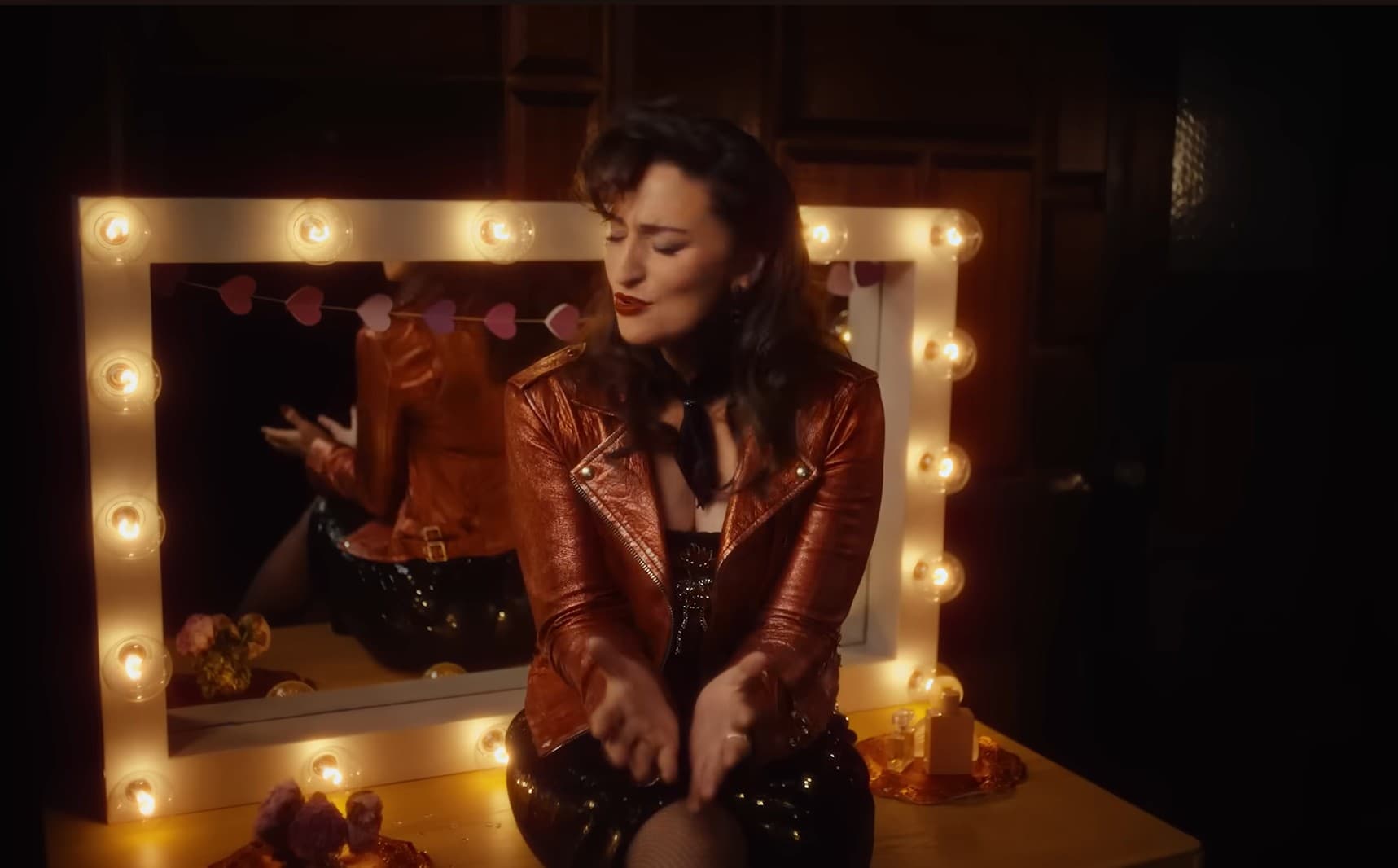
Sara Bareilles "Still Crying": Lyrics Meaning of Grief on Repeat
Sara Bareilles' "Still Crying" is about the exhausting repetition of grief. You think something should have changed. You want to let go. Then suddenly you are crying again.
Bareilles has described exactly that feeling herself. She said she was trying to understand the "redundancy" and "stuckness" of asking why she was still crying and finding herself in the same loop again.
Released July 31, 2026, "Still Crying" is from Bareilles' seventh studio album, Good Grief, due August 28 through Epic Records. She co-wrote and co-produced the track with Aaron Dessner.
What is "Still Crying" by Sara Bareilles about?
"Still Crying" is about wanting grief to be over and discovering that it does not follow your schedule.
Bareilles makes that frustration explicit:
"I'm still crying / Always crying"
The important word is "still." Crying itself is not the surprise. The painful realization is that it keeps happening.
Bareilles has said the song is for people who find themselves in emotional depths more often than they would like. That makes the repeated crying less about one isolated breakdown and more about returning to pain you thought you were already moving through.
The song does not shame that feeling. But Bareilles also makes clear that she does not want to stay there.
"Still Crying" - The official music video
Why does she ask for a rescue?
The second verse turns toward prayer, but even that source of comfort feels uncertain.
"I request a rescue / Tell Him that He moves too slow"
She is asking for help while sounding frustrated that it has not arrived fast enough.
There is another revealing detail when she describes praying to "someone I used to know." The wording suggests distance from whatever relationship with God or faith once felt familiar.
It would be too strong to turn that into a statement about Bareilles' personal beliefs. Within the song, though, it captures the desperation of reaching for something that no longer feels as close as it once did.
Grief has changed not only how the narrator feels, but where she looks for comfort.
"Into the trying" is where something changes
The chorus introduces the song's small but important shift:
"I'll even fall head first / Into the trying"
Bareilles does not suddenly announce that everything is better. Just before this, she sounds skeptical about the idea that everything changes. She almost has to take someone else's word for it.
That makes "trying" important.
The goal is not instant recovery. It is becoming willing to believe that change might still be possible.
The chorus does not break the emotional loop. It marks the moment when Bareilles becomes willing to try moving through it.
Why does everything turn grey?
Bareilles later gives grief a color:
"Grey, grey / The color of all my pain"
She then asks to be taught how to see again and imagines "technicolor rain."
It is one of the song's clearest contrasts. Grey suggests a world drained of feeling and color. Technicolor represents wanting the full range of life back.
But Bareilles does not simply replace sadness with happiness. She asks for color while she is still crying.
That distinction matters. "Still Crying" is not about reaching the other side of grief. It is about wanting to reconnect with life while grief is still present.
How does "Still Crying" fit Good Grief?
"Still Crying" belongs to a larger album built around loss.
Bareilles has publicly discussed losing close friends during the years that shaped Good Grief, including Chad Joseph and her friend and Broadway collaborator Gavin Creel.
That context helps explain why grief runs through the record, but it would be too strong to reduce "Still Crying" to one specific person. Bareilles' explanation of this particular song focuses on the recurring experience of grief and the feeling of becoming stuck inside it.
There is also an important distinction involving Anderson Cooper and Stephen Colbert. Their conversation about grief inspired Bareilles, but "Home" is the song Bareilles directly tied to that conversation, not "Still Crying."
Why the "Girls5eva" reunion fits the song
The official "Still Crying" video was directed by Kimmy Gatewood, who also directed much of the third season of Girls5eva. It reunites Bareilles with people from her Girls5eva circle, including Renée Elise Goldsberry, Paula Pell, John Lutz, Janine Brito and Daniel Breaker. Bareilles' husband, Joe Tippett, also appears.
Bareilles said they had only two weeks to make the video. She initially felt overwhelmed, then called friends and asked for help. They showed up.
That should not be treated as a hidden explanation of the lyrics. But it creates a fitting real-life echo of the song: when something feels too heavy to handle alone, other people can help you keep moving.
"Still Crying" does not pretend grief has an ending
The outro returns to the title instead of offering a clean resolution.
Bareilles is still crying.
That is why "trying" matters so much. The song never promises that effort will immediately erase grief. It suggests something smaller: progress can mean continuing forward even while the pain is still there.
By the end, "still" carries two ideas at once. She is still crying, but she is still trying too.
FAQ
Why is Sara Bareilles grieving?
Bareilles has publicly discussed losing close friends Chad Joseph and Gavin Creel during the years that shaped Good Grief. She has not said that "Still Crying" is specifically about only one of them.
Is "Still Crying" about Gavin Creel?
Gavin Creel's death helped shape the broader grief behind Good Grief, but Bareilles has not identified him as the sole subject of "Still Crying."
Who wrote "Still Crying"?
Sara Bareilles co-wrote and co-produced "Still Crying" with Aaron Dessner.
What inspired "Still Crying"?
Bareilles has said the song came from the repetitive, stuck feeling of finding herself in grief again and asking why she was still crying.
When was "Still Crying" released?
"Still Crying" was released on July 31, 2026. Good Grief follows on August 28.
Further Reading