World Cup 2026 Songs: Lyrics, Meanings and Opening Ceremony Music
World Cup 2026 songs are more than background music. They shape how the tournament feels: through the official song, the official anthem, opening ceremony music, lyrics meanings and English translations. Some tracks are built for stadiums. Others matter because a single phrase travels across languages and becomes part of the World Cup experience.
This guide looks at the key World Cup 2026 songs, what they mean, and why they belong around the tournament.
The main World Cup 2026 songs to know
The most important songs around the tournament include:
- “Dai Dai” by Shakira and Burna Boy
- “DNA” by Andrea Bocelli, David Guetta, Megan Thee Stallion and EJAE
- “Partidazo” by Danny Ocean
- “Game Time” by Future and Tyla
- “Por Ella” by Los Ángeles Azules and Belinda
- “Oye Mi Amor” by Maná
- “Qué Calor” by J Balvin and El Alfa
- “I Like It” by J Balvin
“Dai Dai” is the official FIFA World Cup 2026 song, while “DNA” is the official FIFA World Cup 2026 anthem. That difference matters: “Dai Dai” gives the tournament its main celebratory track, while “DNA” gives it a larger message about identity, unity and belonging.
Reports from the Mexico City opening ceremony listed songs including “Oye Mi Amor,” “Partidazo,” “Por Ella,” “Qué Calor,” “I Like It” and “Dai Dai.”
“Dai Dai” by Shakira and Burna Boy
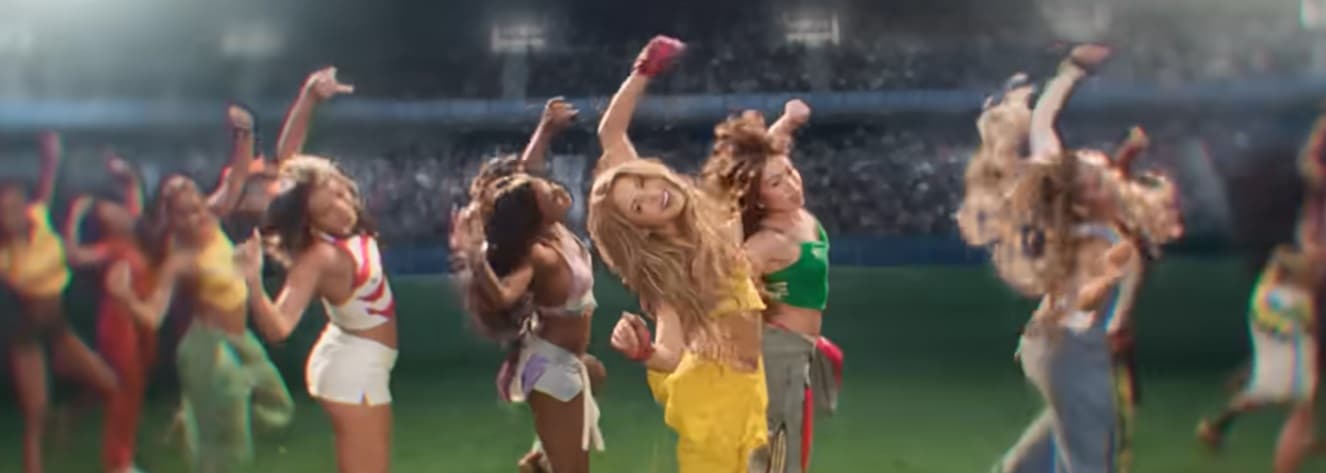
“Dai Dai” is the clearest World Cup song of 2026. It brings together Shakira’s long connection with World Cup music and Burna Boy’s global Afrobeats sound. The song does not work like a quiet story. It works like a call to move. It is made for crowds, dancers, flags and the moment when a stadium starts to feel larger than the match itself.
The meaning is simple, but that is part of the point. “Dai Dai” is about celebration, rhythm and shared energy. It does not need to explain football in detail. It gives the tournament a body: something people can move with before they understand every word.
Recommended related article:
“DNA” by Andrea Bocelli, David Guetta, Megan Thee Stallion and EJAE
“DNA” takes a different path. Where “Dai Dai” moves through rhythm, “DNA” gives the tournament a message. The title suggests that football is not only something people watch. It is something they inherit, remember and carry with them.
The artist combination is part of the meaning. Andrea Bocelli brings ceremony. David Guetta brings scale. Megan Thee Stallion brings force. EJAE adds another global voice. The result is built to sound international from the start.
That fits this World Cup. The 2026 tournament is hosted across Canada, Mexico and the United States, with more teams and more audiences than before. “DNA” treats football as identity, not only competition.
Recommended related article:
“Partidazo” by Danny Ocean
“Partidazo” is one of the smartest titles in the World Cup 2026 music mix. In Spanish, “partidazo” can mean a great match or a big game. That gives the song an immediate football connection. But Danny Ocean does not turn it into a heavy anthem. The track feels lighter, more playful and closer to pop than stadium drama.
For English-speaking listeners, the title matters. Without translation, “Partidazo” may just sound catchy. With translation, the song becomes clearer: it is about the feeling of a big moment, whether that moment is a match, a night out or a person who suddenly feels exciting.
Recommended related article:
“Game Time” by Future and Tyla
“Game Time” is built around pressure. The title sounds like a signal: the waiting is over, the moment is here, and everyone has to show what they can do. In a football setting, that idea is easy to understand. But the song does not need to describe the rules of the game. “Game time” already carries the feeling of performance.
Future brings cool confidence. Tyla brings rhythm and brightness. Together, the song feels like entrance music before a big moment.
Recommended related article:
Opening ceremony songs
The opening ceremony matters because it gives the tournament its first public sound. Not every song performed there has to be an official anthem. Some songs work because they are familiar. Some represent a place. Some make the ceremony feel alive before the match begins.
Reports from the Mexico City opening ceremony listed:
- “Oye Mi Amor” by Maná
- “Partidazo” by Danny Ocean
- “Por Ella” by Belinda and Los Ángeles Azules
- “Qué Calor” by J Balvin and El Alfa
- “I Like It” by J Balvin
- “Dai Dai” by Shakira and Burna Boy
That mix makes sense. It connects Mexican pop-rock, cumbia, Latin pop, Afrobeats and global stadium music. The first sound of the tournament was international, but it also had a strong Mexico City center.
“Oye Mi Amor” by Maná
“Oye Mi Amor” is not a new World Cup song, but it brings recognition. Its role is not to explain the tournament. It gives the crowd a familiar Mexican pop-rock voice. The title is direct: someone is asking to be heard. That kind of line works well in a stadium because it turns a private phrase into something many people can sing together.
“Por Ella” by Belinda and Los Ángeles Azules
“Por Ella” brings cumbia into the World Cup setting. That matters because not every tournament song has to sound like a stadium anthem. “Por Ella” feels warmer and more romantic. It adds movement and local color, but in a softer way than the official tracks.
The title means “for her.” That gives the song a simple emotional direction: someone becomes the reason for singing, feeling or moving.
Recommended related article:
“Qué Calor” by J Balvin and El Alfa
“Qué Calor” is built for heat, dance and crowd energy. The phrase means “so hot” or “what heat,” but the song works less through deep meaning and more through physical feeling. In the opening ceremony, it adds speed, color and movement.
This does not need a long standalone article unless search demand grows. On this hub, a short explanation is enough.
“I Like It” by J Balvin
“I Like It” already has global recognition. Its role in the ceremony is less about lyrical meaning and more about familiarity. It brings a crossover moment that many listeners already know. That makes the opening ceremony feel broader, more multilingual and easier to enter.
Why English translations matter for World Cup songs
Some World Cup songs work before they are translated. A crowd can respond to rhythm, melody and repetition without understanding every word.
But translation changes the experience. It shows what the title means. It shows where the emotion sits. It helps a listener understand whether a song is about pride, desire, movement, home, confidence or release.
The strongest English translation candidates are:
- “Dai Dai”
- “Partidazo”
- “Por Ella”
- “Oye Mi Amor”
- "Que Calor"
These songs are not difficult because they are complex. They matter because small phrases carry context. “Partidazo” is a football feeling. “Oye Mi Amor” is a direct call. “Por Ella” brings romance into a stadium setting.
That is where Lyrics.me can add real value: not only by showing what the words say, but by explaining why they fit the moment.
Fan songs and stadium moments
Not every World Cup song is official. Some songs become part of the tournament because fans choose them. They are sung in stadiums, shared online or attached to one national team’s run. These songs can change from week to week. One win, one clip or one emotional moment can turn an old song into a tournament song.
A good fan song usually has:
- a simple phrase people can repeat
- a feeling of home, pride or release
- a chorus that works when thousands of people sing it together
This section should stay open during the World Cup. It can grow as new fan songs appear.
Why Shakira’s World Cup songs still matter
Shakira’s role in World Cup music is bigger than one song. For many listeners, her name is already tied to tournament music because of earlier World Cup moments. That history changes how “Dai Dai” is heard. It is not just a new release. It arrives with memory attached to it.
“Dai Dai” works on two levels. For new listeners, it is a bright global pop song with Burna Boy. For longtime football fans, it connects to a longer story of Shakira turning World Cup music into something people remember after the tournament ends.
Recommended related articles:
The World Cup 2026 songs to know first
Start with “Dai Dai” because it is the official song and the clearest link between the World Cup, Shakira and Burna Boy.
Then listen to “DNA” because it gives the tournament its main anthem message: football as identity, not only competition.
Add “Partidazo” because it gives the World Cup a lighter Spanish pop moment and a title that connects directly to the idea of a great match.
Then listen to the opening ceremony songs, especially “Oye Mi Amor” and “Por Ella,” because they show how much the first sound of the tournament was shaped by Mexico City.
Related lyrics and meanings
For deeper reading, these are the most useful individual song pages to build around this hub:
- “DNA” World Cup Song Lyrics Meaning: More Than Just a Game
- Shakira & Burna Boy “Dai Dai” Lyrics Meaning and English Translation
- Danny Ocean “Partidazo” English Translation and Meaning
- Future & Tyla “Game Time” Lyrics Meaning
- Belinda & Los Ángeles Azules “Por Ella” English Translation and Meaning
- Maná “Oye Mi Amor” English Translation and Meaning
These pages should link back to this guide. The guide should also link out to each song page. That way, the World Cup music topic becomes a real Lyrics.me cluster, not a loose group of articles.
FAQ
What is the official World Cup 2026 song?
The official FIFA World Cup 2026 song is “Dai Dai” by Shakira and Burna Boy. It gives the tournament its main celebratory track.
What is the official World Cup 2026 anthem?
The official FIFA World Cup 2026 anthem is “DNA” by Andrea Bocelli, David Guetta, Megan Thee Stallion and EJAE. The song frames football as identity, unity and belonging.
Which songs were performed at the World Cup 2026 opening ceremony?
Reports from the Mexico City opening ceremony listed songs including “Oye Mi Amor,” “Partidazo,” “Por Ella,” “Qué Calor,” “I Like It” and “Dai Dai.”
Which World Cup 2026 songs need English translation?
The strongest translation candidates are “Dai Dai,” “Partidazo,” “Por Ella,” “Oye Mi Amor” and “Qué Calor.” These songs use Spanish or multilingual phrasing, and translation helps explain not only the words but also the feeling behind them.
Why do World Cup songs matter?
World Cup songs matter because they give the tournament a shared sound. They help fans remember not only goals and matches, but also the feeling around them: arrival, pride, movement, home and celebration.
Final thought
The World Cup 2026 soundtrack is not one song. It is a mix of official music, opening ceremony performances and fan moments that keep changing as the tournament moves forward. “Dai Dai” gives the event its main celebration. “DNA” gives it a message. “Partidazo” gives it a playful football word. The opening ceremony songs give it place, color and memory.
Together, they show what World Cup music does best: it turns a global tournament into something people can sing, even before they fully understand every word.