COSMÓ’s “Tanzschein”: The Meaning Behind Austria’s ESC 2026 Song
Austria’s Eurovision 2026 song “Tanzschein” turns the idea of a dance permit into a playful reflection on nightlife, hesitation and the moment people decide to move.
Austria will be represented at the Eurovision Song Contest 2026 by COSMÓ with “Tanzschein.” As the host country’s entry in Vienna, the song arrives with extra attention — but it does not feel like a big patriotic statement. It is smaller, stranger and more direct: a club song about who really came to dance. COSMÓ is listed as Austria’s 2026 artist on the official Eurovision site, with “Tanzschein” as the country’s entry.
What Does “Tanzschein” Mean?
The German title “Tanzschein” roughly means “dance permit.” It can also be understood as a kind of dance licence, but “permit” fits the song’s central image more closely: a club where people are only allowed in if they are really there to dance.
“Sie brauchen einen Tanzschein”
That short line carries the whole idea. It sounds like a rule at the door, but it also turns the dance floor into a question. Are people only present in the room, or are they ready to take part?
The Story Behind the Song
The idea behind “Tanzschein” has a personal side. COSMÓ has explained that his mother told him about club nights where people dressed in colorful, extravagant ways, the music felt exciting and everyone danced. His own first club experience felt different: darker, more static and more awkward. ORF quotes him saying that people were mostly standing around, and that this was something he wanted to change.
That background helps explain why the song treats dancing as something more than entertainment. In “Tanzschein,” dancing becomes a way of loosening up, joining in and caring less about how others might judge you.
COSMÓ also describes dancing as “an international language.” That fits the song well. Even if listeners do not understand every German line, the image is easy to follow: music is playing, the room is waiting, and someone has to make the first move.
Why the Club Matters
The club in “Tanzschein” is not only a party setting. It becomes a small social scene.
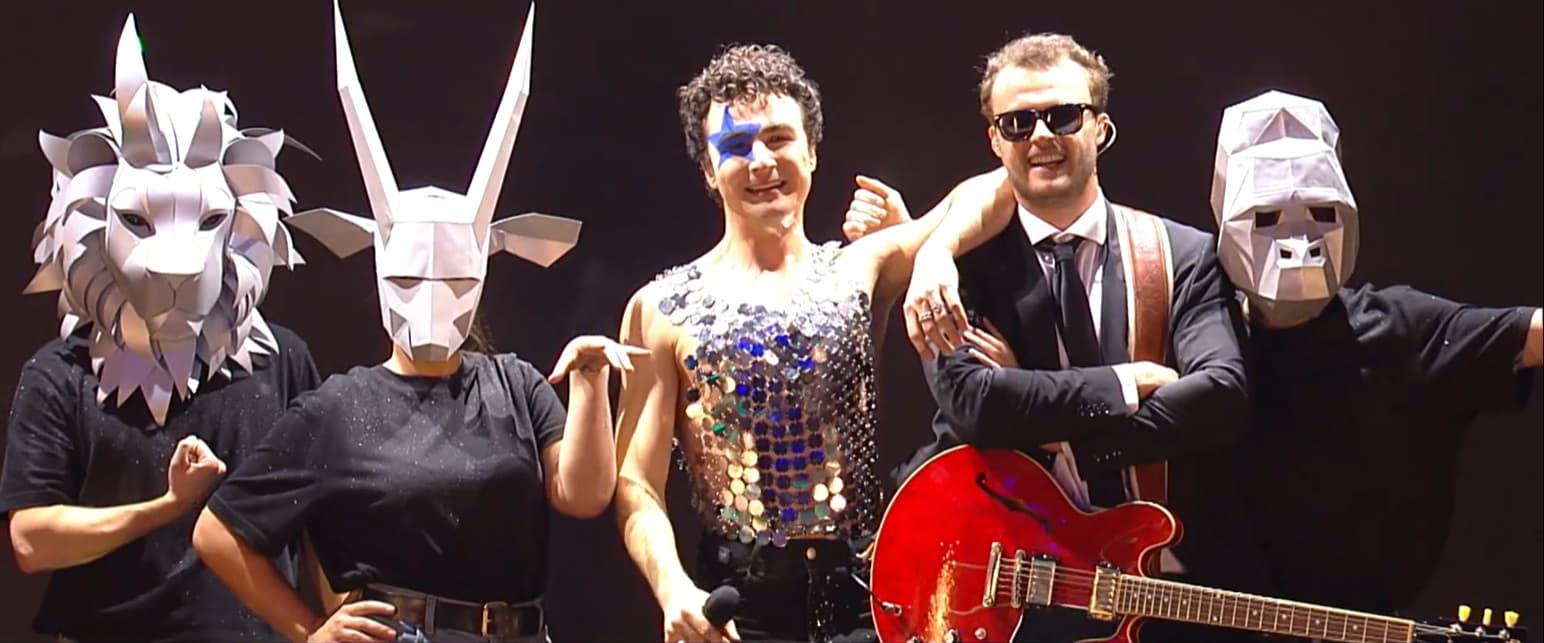
The lyrics use animal images — including a lion, a gazelle, dogs and a gorilla — to show how strange a crowded dance floor can feel. Some people seem too confident. Others hold back. Some watch instead of moving. The song keeps this playful, but the feeling behind it is familiar.
Many people know the pressure of being in a room where everyone is supposed to be relaxed, while still quietly checking what everyone else is doing. “Tanzschein” gives that feeling a funny shape: maybe people need permission before they can really start moving.
Why the German Lyrics Work
The German language gives “Tanzschein” a clear local identity. The word itself is compact and unusual, which makes it memorable even for listeners who do not speak German.
For Austria, especially as the host country, that matters. The song does not need to explain everything in English. Its main idea travels through the title, the rhythm and the image of the dance floor.
That makes COSMÓ’s Eurovision 2026 song feel both specific and open. It belongs clearly to Austria, but its question is simple enough for anyone to understand: who is really here to dance?
Why “Tanzschein” Works for Eurovision
Eurovision songs often need one clear idea. “Tanzschein” has one. The title is memorable. The image is easy to grasp. The mood is playful without feeling empty. Instead of turning its message into a lecture, the song creates a scene: a club, a crowd, a strange rule and the hope that people will stop watching from the side.
COSMÓ’s official Eurovision profile lists Benjamin Gedeon, Elias Stejskal and Ella Stern as the writers of the music and lyrics. The same profile describes COSMÓ as a Hungarian-born singer who grew up in Burgenland, Austria, and now lives in Vienna.
In the end, Austria’s Eurovision 2026 song is not really about paperwork. It is about permission — the quiet moment when people stop waiting and decide to move together.
Further Reading